Special Energy Report
Weird DIY Device Americans Are Using Instead Of Generators To Keep The Lights On And Their Families Safe During Emergencies
A forgotten invention inspired by Nikola Tesla's early experiments is quietly helping thousands of American families keep the lights on, phones charged, and refrigerators running when storms, blackouts, and grid failures strike — without the noise, fuel, or five-figure price tag of a traditional generator. Using parts from any hardware store and a single afternoon in the garage. No solar panels. No 25-year loans. No contractor.

By Karen Whitfield
Contributing Editor · Updated this week · 6 min read
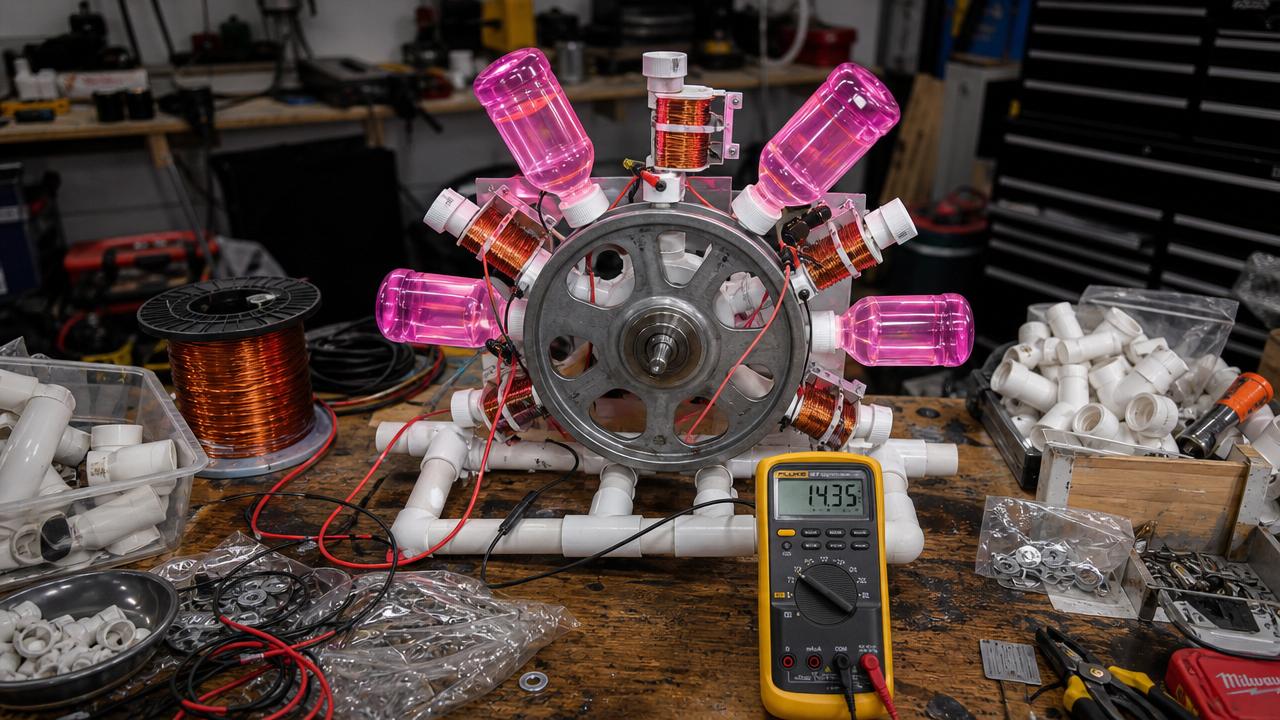
If you'd told Sarah two years ago that her family would keep the lights on during a blackout with a device her husband built in the garage over one weekend, she would've laughed. "We always assumed we'd need a noisy generator or a $20,000 solar setup if the power ever went out for more than a few hours."
Then last winter an ice storm rolled through their county and knocked out power for three days. The neighbors fired up gas generators at dawn — loud enough to rattle windows — and spent hours hunting for fuel. Sarah's family sat in the dark, phones died, the fridge warmed up, and her youngest cried because the nightlight wouldn't work.
"I felt helpless," she said. "Not because we didn't have power, but because I realized we had zero backup plan. No generator. No solar. Nothing."
"I kept thinking, there has to be a better way to keep my family safe than fighting for the last gas can at Walmart."
The breaking point came the second night. Temperatures dropped, the house got cold, and the grocery store had already sold out of ice. Solar quotes came back at $15,000 to $28,000. Whole-home generators were $8,000 to $15,000 — plus fuel, plus maintenance, plus the noise. "We didn't have that kind of money sitting around. Not even close."
Then a friend forwarded them a guide that had been quietly making the rounds online. A step-by-step system that walks families through building a small backup power unit inspired by Nikola Tesla's early experiments. Parts from any hardware store. No engineering background. No electrician needed for the build itself. And nothing like the bulky, fuel-hungry generators she'd been pricing out.
Want to see the device for yourself?
Watch The Video →What happened when the lights went out again
Mike watched the video walkthrough on a Friday night. Saturday morning, he drove to the hardware store with a printed parts list. By Sunday evening, the unit was running in the corner of their garage.
"It wasn't magic," Sarah says carefully. "It didn't run our whole house. But when the next storm hit and the grid went down, we had lights in the kitchen, charged phones, and a fridge that stayed cold. That's what kept us safe."
Their neighbors traded stories of spoiled food and dead cell phones. Sarah's family rode out the outage with the essentials running — no gas cans, no extension cords snaking through windows, no deafening engine outside the bedroom.
"For the first time in years, a blackout didn't terrify me."
Why families are choosing it over generators
Sarah isn't alone. Thousands of families, from apartments in Phoenix to cabins in Vermont to RVs on the road, are using the same guide to stay safe and self-reliant when the grid fails.
The three things families keep repeating in their reviews:
- No gas cans, no oil changes, and no hunting for fuel during a storm
- The instructions are written for regular people, not engineers
- It keeps the essentials on without the noise of a generator
Want to see the device for yourself?
Watch The Video →What we found when we looked into it
Our editorial team dug in. The guide is delivered digitally, so there's nothing to wait for in the mail. It's backed by a 60-day money-back guarantee through the checkout provider, meaning if a family tries it and it isn't right for their home, they can request a refund, no argument.
That, more than anything, is what tipped us over. In a world of $8,000 generators and $20,000 solar contracts, a guide that helps families build their own backup power for under $200 — with a 60-day refund window — is a very different kind of promise.
Real Families
What other households are saying
"I used to dread storm warnings. Now we have a plan that doesn't involve a loud generator or hoping the gas station has fuel."
Megan R.
Mom of 3 · Ohio
"Phoenix summers are brutal and the grid can't always keep up. When the power went out, our lights and fans stayed on. My kids slept through it."
Daniel P.
Dad · Arizona
"We're on a fixed income. A whole-house generator was out of the question. This gave us peace of mind without draining our savings."
Linda & Robert K.
Retired · North Carolina
Works in homes, apartments, cabins & RVs
Whether you own a 3-bedroom colonial, rent a one-bedroom apartment, spend weekends at a cabin, or live full-time in an RV, the guide shows you how to keep the essentials running when the grid goes down.
Reader Offer
See The Device Families Are Building Before The Next Outage
Instant digital access. 60-day money-back guarantee. No generator, no fuel, no 25-year loan.
Watch The Video & Get The GuideReader pricing available for a limited time
Reader Comments (188)
Sorted by: Top
Jessica M.
· 2 hrs ago
My husband was skeptical too. We built ours over Labor Day weekend. When the ice storm hit last month, we were the only house on the block with lights and a working coffee maker.

Robert T.
· 5 hrs ago
Retired electrician here. Nothing 'magic' about it, it's basic backup power done right. Wish I'd seen this before I paid $8k for a noisy generator.

Amanda K.
· 8 hrs ago
Ordered last Sunday. My 14-year-old helped me put it together after school. Now I don't panic every time the weather app shows a thunderstorm.

Diane P.
· 1 day ago
We live in a small apartment and I didn't think this was for us. The guide has a whole section for renters. I can keep my phone and a lamp going if the building loses power.